

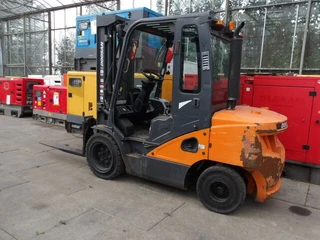
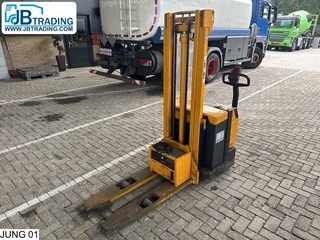
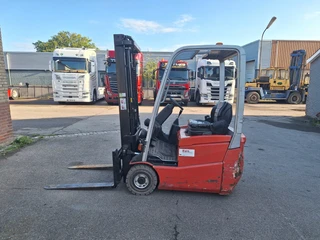
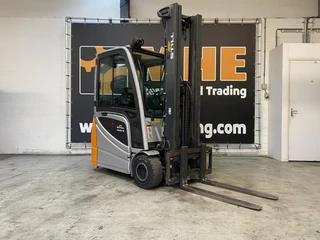
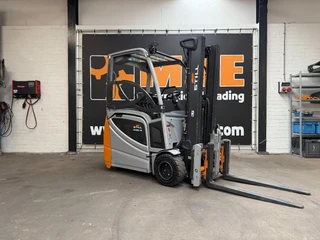
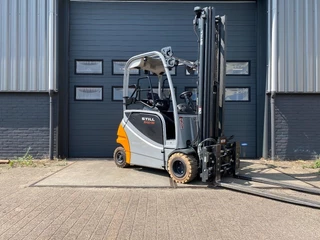
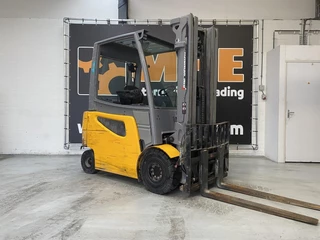
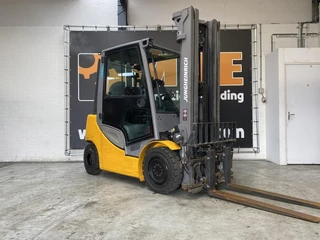
Buying a forklift: what should you pay attention to?
For a forklift, load capacity, lift height, load center and dimensions must match the workplace. The rated capacity on the data plate does not automatically indicate what the truck can lift at maximum height or with attachments.
Therefore, measure loads, racking, doorways and aisles before comparing models. Then evaluate the mast, power source, tyres, forks and attachments as a complete configuration.
Load capacity and load center
The rated capacity applies at a specified load center and a specific lift height. A long or unevenly distributed load shifts the center of gravity forward and reduces safe capacity.
Attachments such as a sideshift, fork positioner, clamp or rotator add weight and shift the load. Therefore, use the load chart of the actual combination for the heaviest load and highest rack position that occur regularly.
Mast and available space
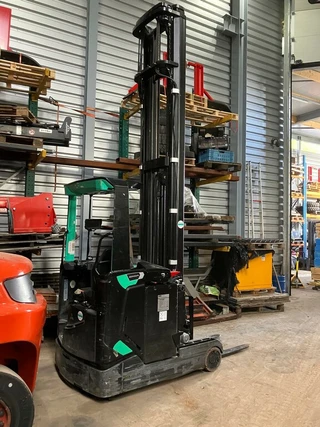
Measure maximum lift height, collapsed mast height and available overhead clearance. Duplex and triplex masts differ in overall height and extension behavior. Free lift is important when loads need to be raised inside a container, truck or low-ceiling area without the mast extending immediately.
In addition, check overall width, length, turning radius and required aisle width with standard pallets. Fork length and span between the forks must also suit pallets and loads.
Electric, diesel or LPG
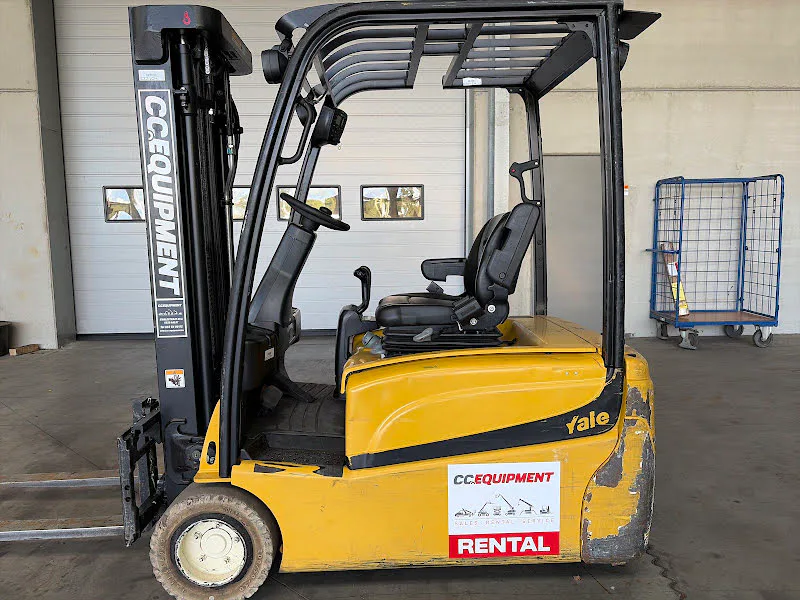
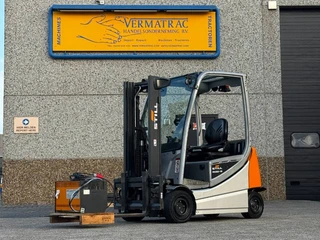
An electric forklift is quiet and produces no local emissions. This version is well-suited for indoor operation, provided battery capacity and charging schedules cover operating hours. Check grid connection, charger and available time for charging or battery swapping.
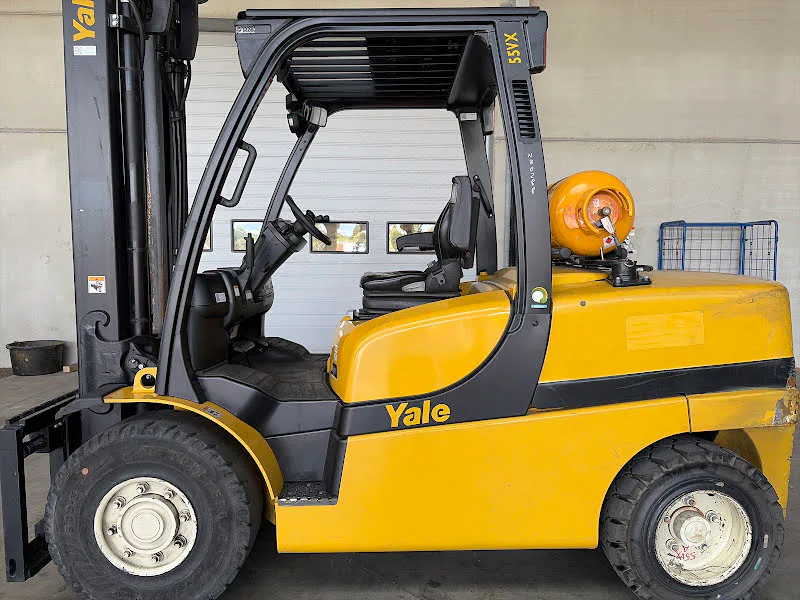
Diesel is suitable for heavy-duty outdoor applications. LPG can be used both indoors and outdoors when ventilation and local regulations permit. In addition to fuel, compare engine noise, heat, maintenance and the availability of fuel or charging points at the workplace.
Tyres and surface conditions
Cushion or solid rubber tyres are puncture-resistant and suited for smooth industrial floors. Pneumatic or rough-terrain tyres offer more comfort and grip on uneven surfaces, but affect dimensions, stability and maintenance.
Check floor loading, thresholds, ramps and outdoor routes. A warehouse forklift does not need to be suited for gravel, construction sites or wet ramps. Also pay attention to ground clearance, drive system and braking performance on the actual surface.
Inspecting a used forklift
Inspect mast channels, chains, rollers, forks, carriage and hydraulics for wear, deformation, play and leaks. Test lifting, tilting, steering and braking with an appropriate load and check the hour meter and maintenance history.
For an electric forklift, ask about the age, charge cycles, maintenance and tested capacity of the traction battery. Check cells, cables, connectors and charger. For diesel and LPG, inspect the engine, cooling system, exhaust, transmission and fuel system.
Comparing new and used forklifts
On TruckTrader you can compare forklifts by brand, model, year of manufacture, operating hours, lift capacity, mast and drive type. Ask the seller for the load chart and details regarding the battery, attachments, maintenance and performed inspections.
For example, view Toyota forklift, Linde forklift, Jungheinrich forklift, Still forklift, Hyster forklift and Yale forklift and compare the configuration with the loads, racking and aisles at your workplace.
Looking for a different machine for internal material handling or working at height?
Also view Agricultural machines for sale, Aerial platforms for sale, Cranes for sale, Parts for sale and Trailers for sale.