



Buying an aerial work platform: what should you pay attention to?
The right aerial work platform is determined by the location where the work must be carried out. Working height, outreach, platform capacity, ground conditions and available maneuvering space are more important than just the size of the machine.
First determine where personnel and tools need to reach. Then compare machine configuration, drive system, tires, transport dimensions and safety features for the complete working profile.
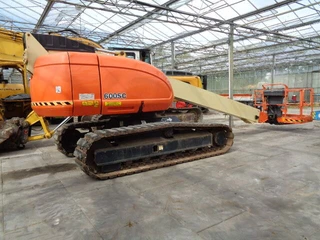
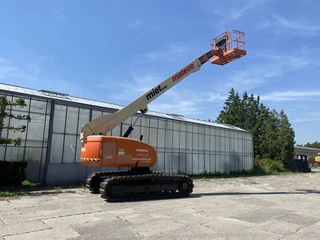
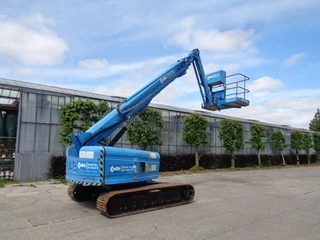
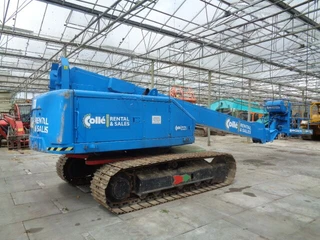
Scissor, articulating or telescopic boom lift
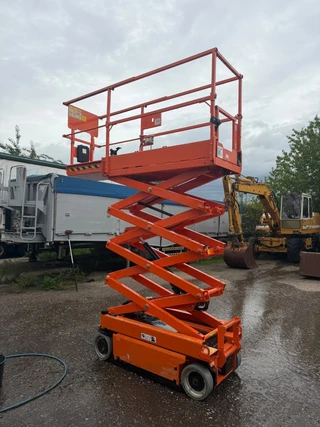
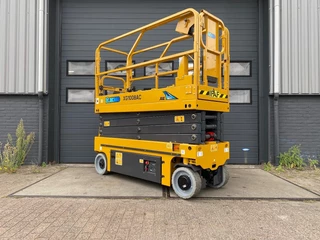
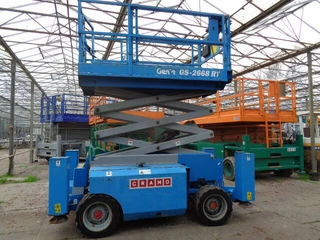
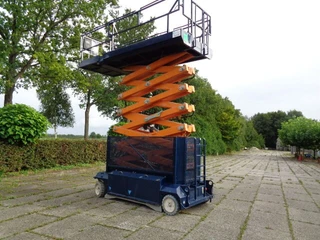
A scissor lift moves primarily vertically and offers a relatively large platform for multiple people and materials. This version suits assembly, installation and maintenance when the work area is directly above the machine.
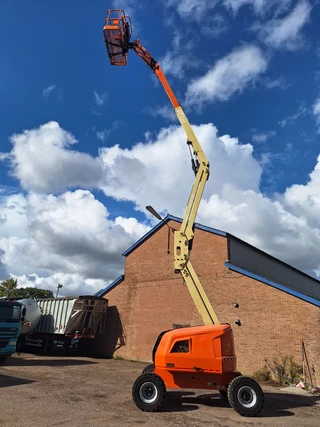
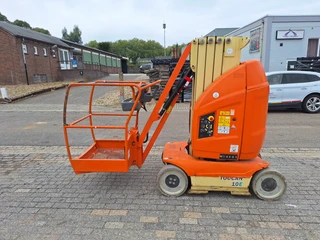
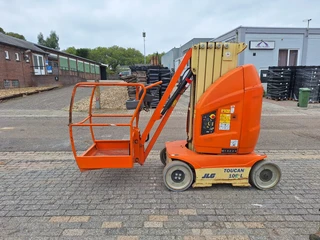
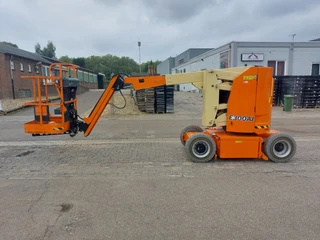
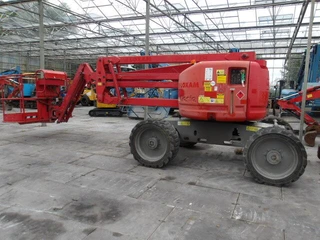
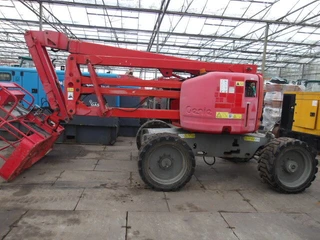
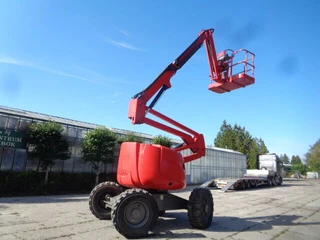
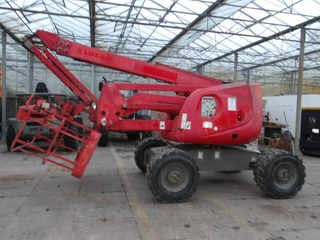
An articulating boom lift can reach over obstacles and is suited for complex job sites. A telescopic boom lift offers extensive horizontal reach, but requires more maneuvering space. A vertical mast lift is compact for narrow indoor spaces and light duties.
Working height and outreach
Working height and platform height are not the same. Working height includes an assumed reach above the platform floor. Therefore, compare machines using the same specification and allow a margin for posture and tools required for the job.
With horizontal outreach, the permitted platform load or reach sometimes decreases. Check the working diagrams at the required height, outreach and platform load, and see if movements in that zone are restricted.
Ground conditions, tires and drive system
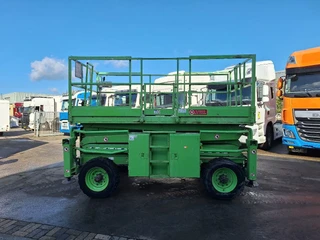
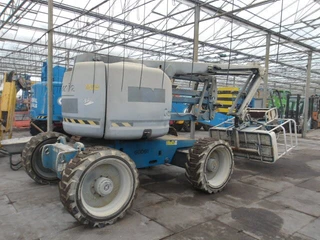
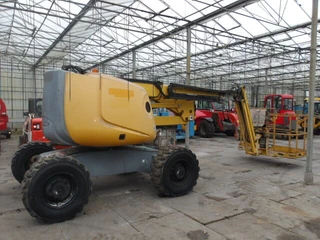
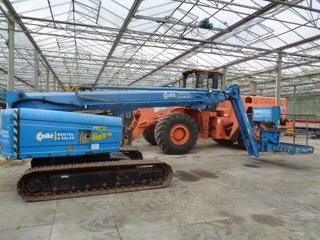
A flat warehouse floor requires a different machine than a soft or uneven construction site. Indoors, compact dimensions, electric drive and non-marking tires are often important. Outdoors, four-wheel drive, oscillating axles, rough-terrain tires and additional ground clearance may be necessary.
Check the permitted gradeability for driving and working, and evaluate how the machine is stabilized. A truck-mounted lift uses outriggers; self-propelled machines rely on the chassis, axles and automatic safety systems depending on the type.
Platform capacity and transport
Add up personnel, tools and materials, and compare this with the platform capacity in the desired working zone. Pay attention to platform dimensions, entry gate, power outlets, air lines and tool attachment points.
Measure transport height, width, length and weight. Check whether the aerial work platform fits through doors and gates and can be transported with the available vehicle or trailer. For self-propelled machines, loading angle and tie-down points are also important.
Checking a used aerial work platform
Test ground and platform controls, emergency lowering system, sensors, brakes, hydraulics and all movements. Check boom sections, pivot points, cable chains, platform and chassis for excessive play, cracks, leaks and repairs.
Ask about operating hours, maintenance and inspections. For electric machines, check the age, condition and capacity of the traction battery and charger; for internal combustion engines, also inspect the engine, emission system and fuel supply.
Comparing new and used aerial work platforms
On TruckTrader you compare aerial work platforms by make, model, year of manufacture, working height, drive type and configuration. Ask the supplier for working diagrams, transport dimensions, hour meter readings and information regarding maintenance and inspections.
For example, view Genie aerial platform, JLG aerial platform, Haulotte aerial platform, Skyjack aerial platform, Manitou aerial platform and Niftylift aerial platform and compare reach, platform capacity and terrain suitability.
Are you looking for a different machine for working at height or material handling?
Then also view Vans for sale, Trucks for sale, Cranes for sale, Forklifts for sale and Agricultural machines for sale.